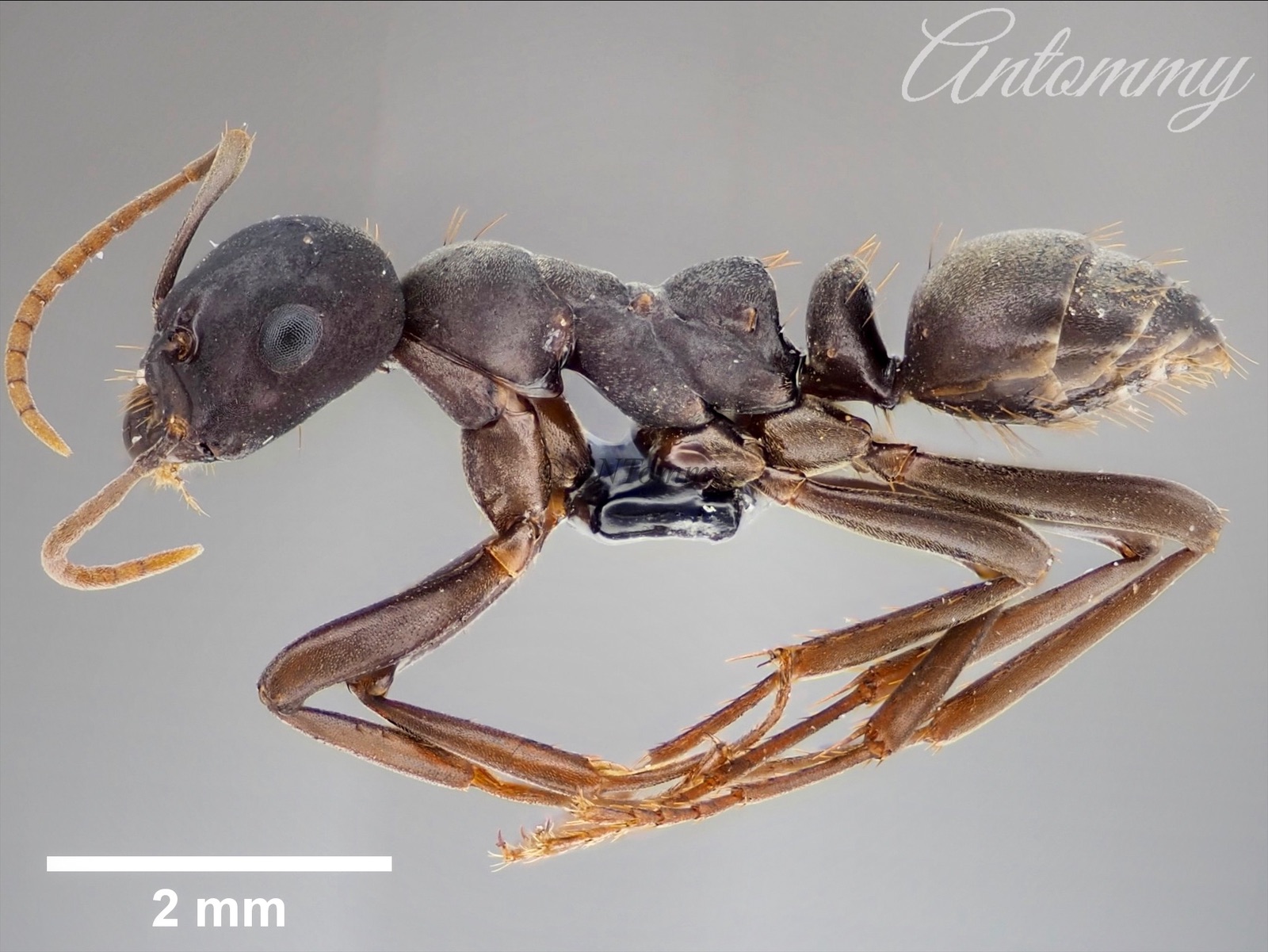
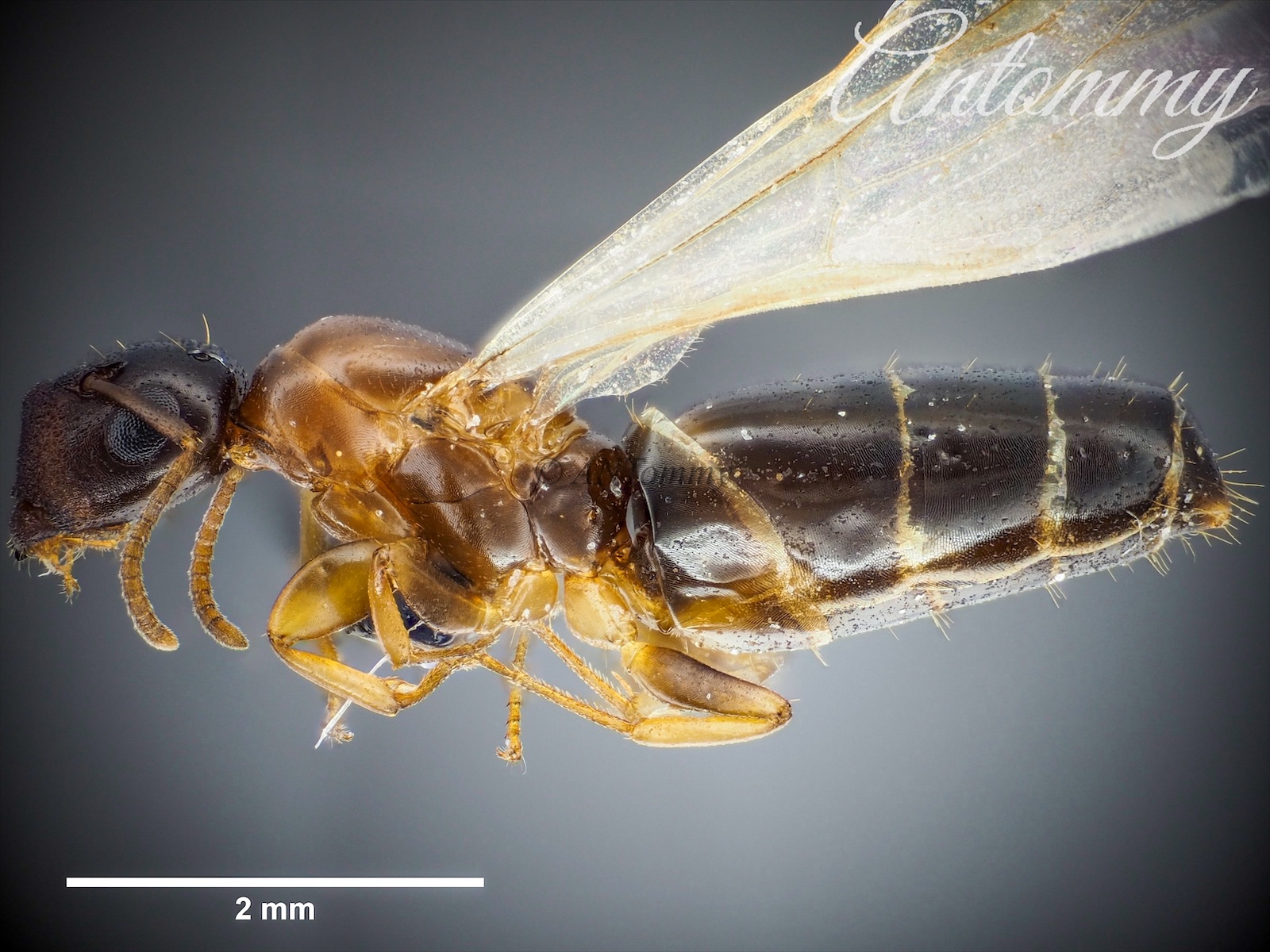
Camponotus obscuripes

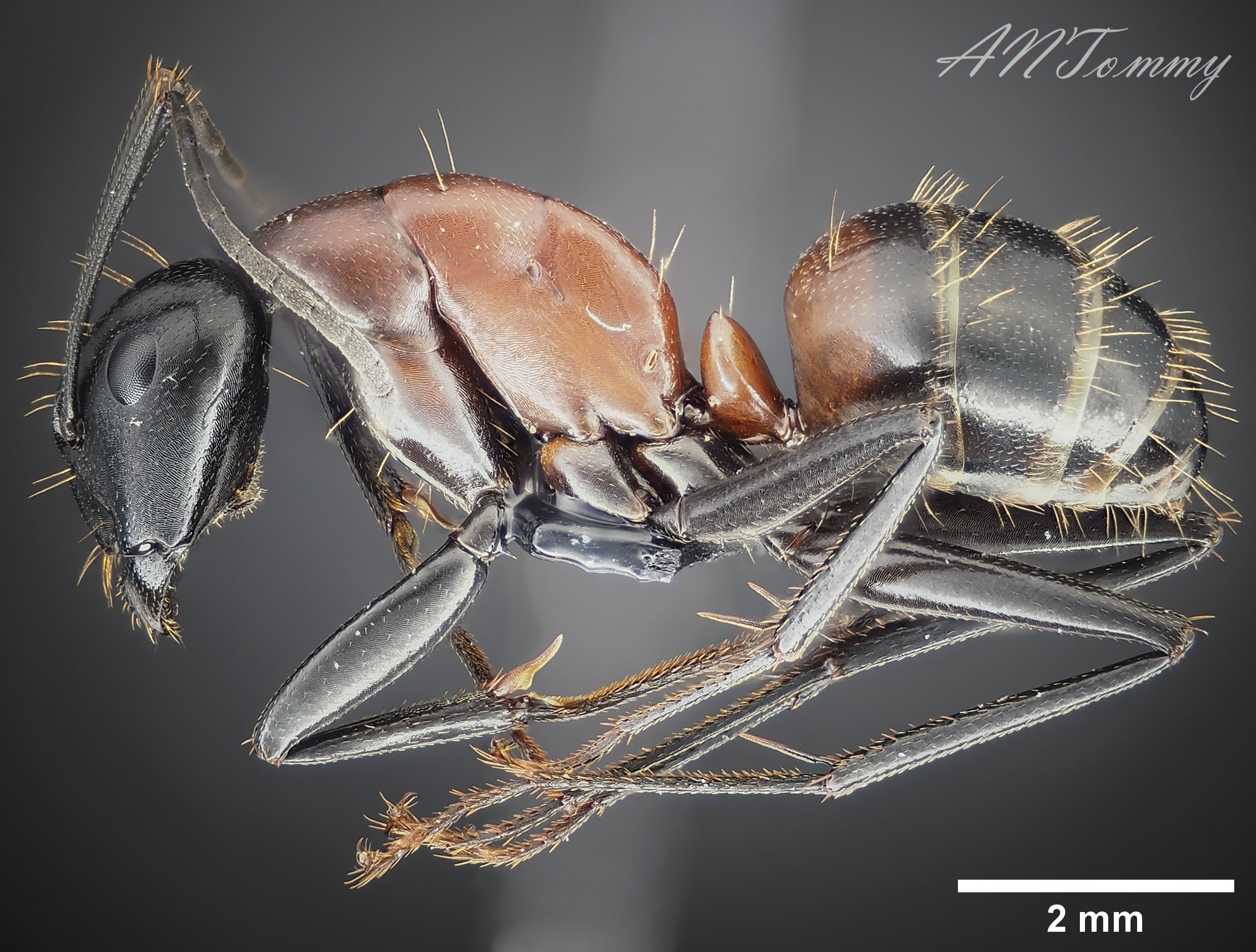
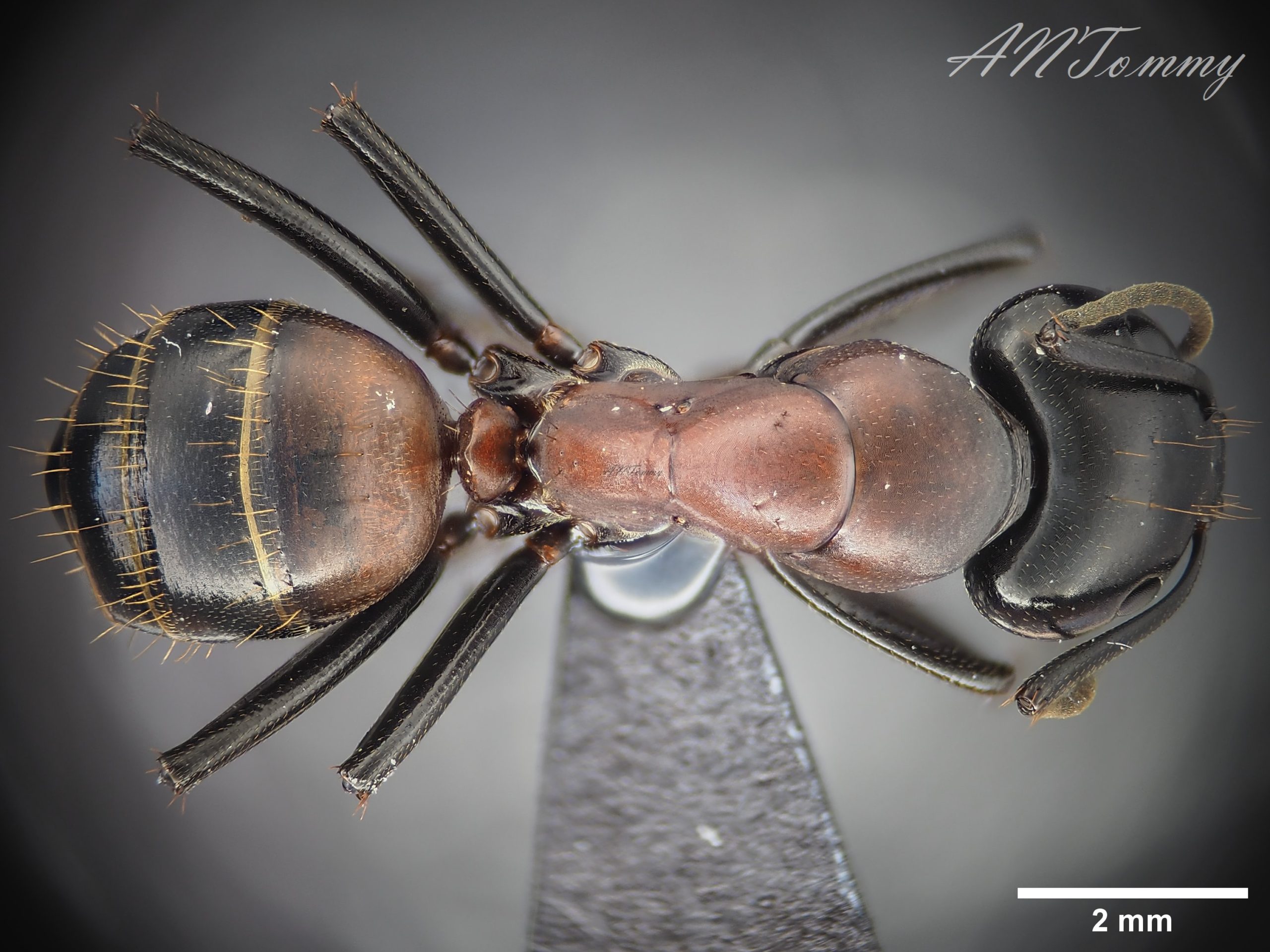
Camponotus obscuripes

Camponotus obscuripes Mayr, 1879

Worker
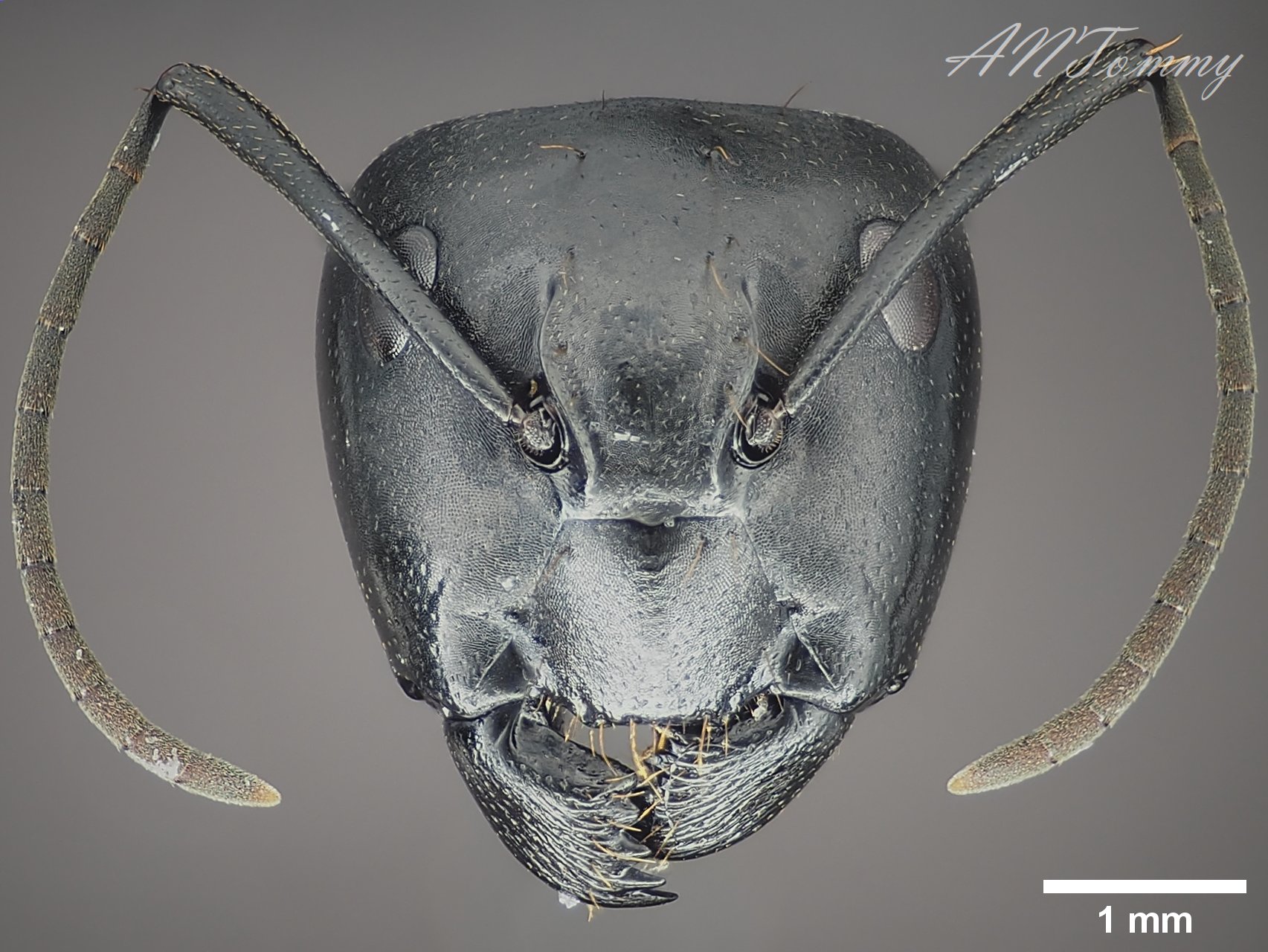
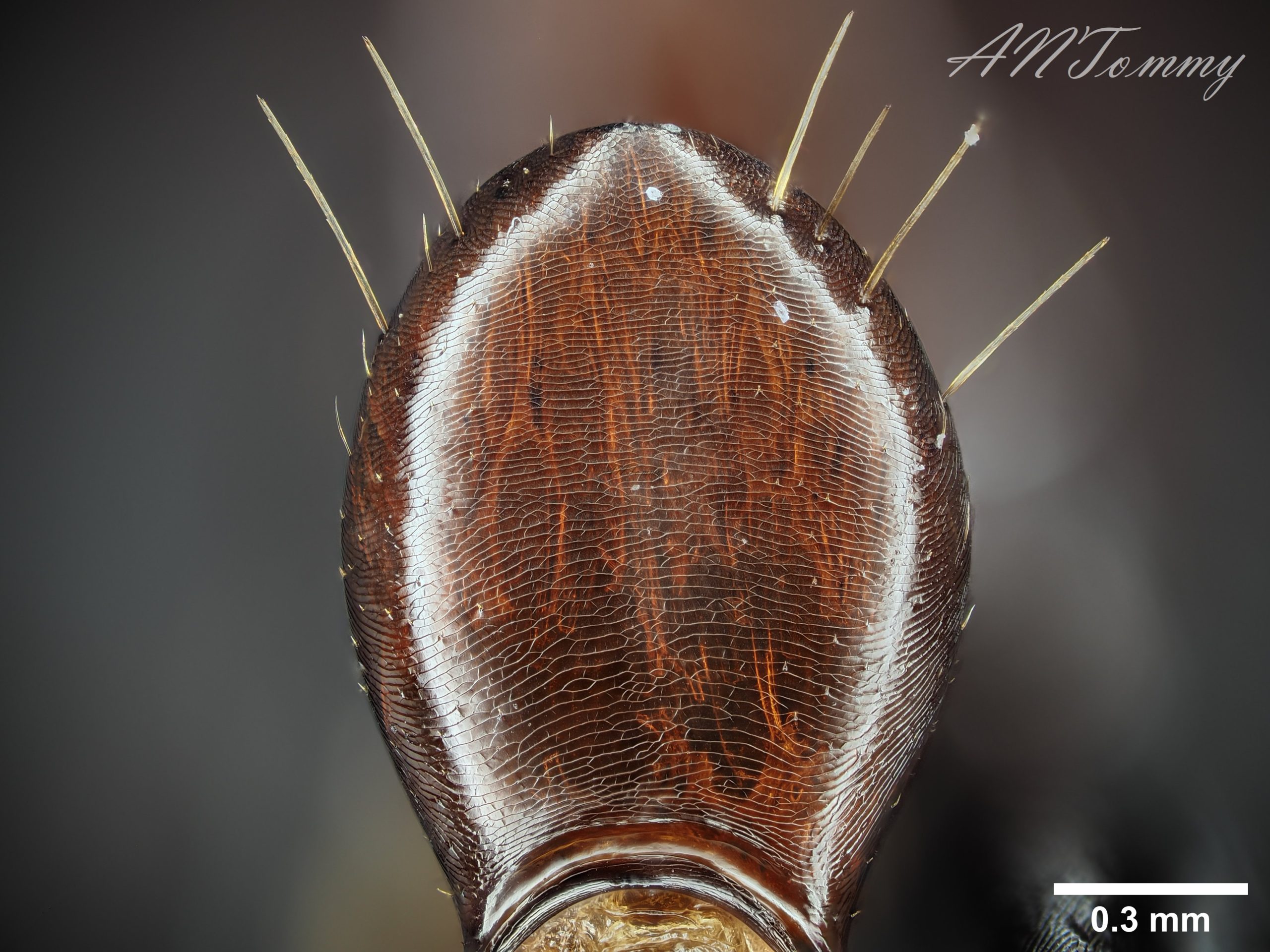
Camponotus obscuripes

Queen

Male

References

Mayr, G. 1879. “Beiträge zur Ameisen-Fauna Asiens.” Verhandlungen der Zoologisch-Botanischen Gesellschaft in Wien, 28: 645-686.

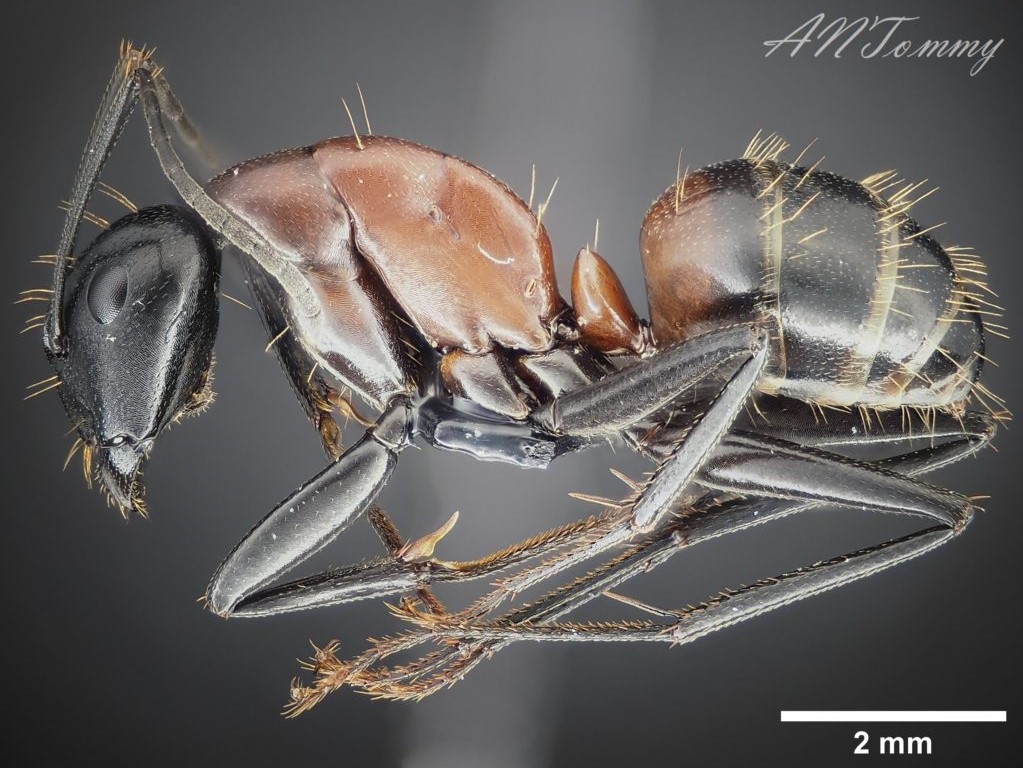
Strumigenys benten

Strumigenys benten

Strumigenys benten Terayama, Lin & Wu, 1996

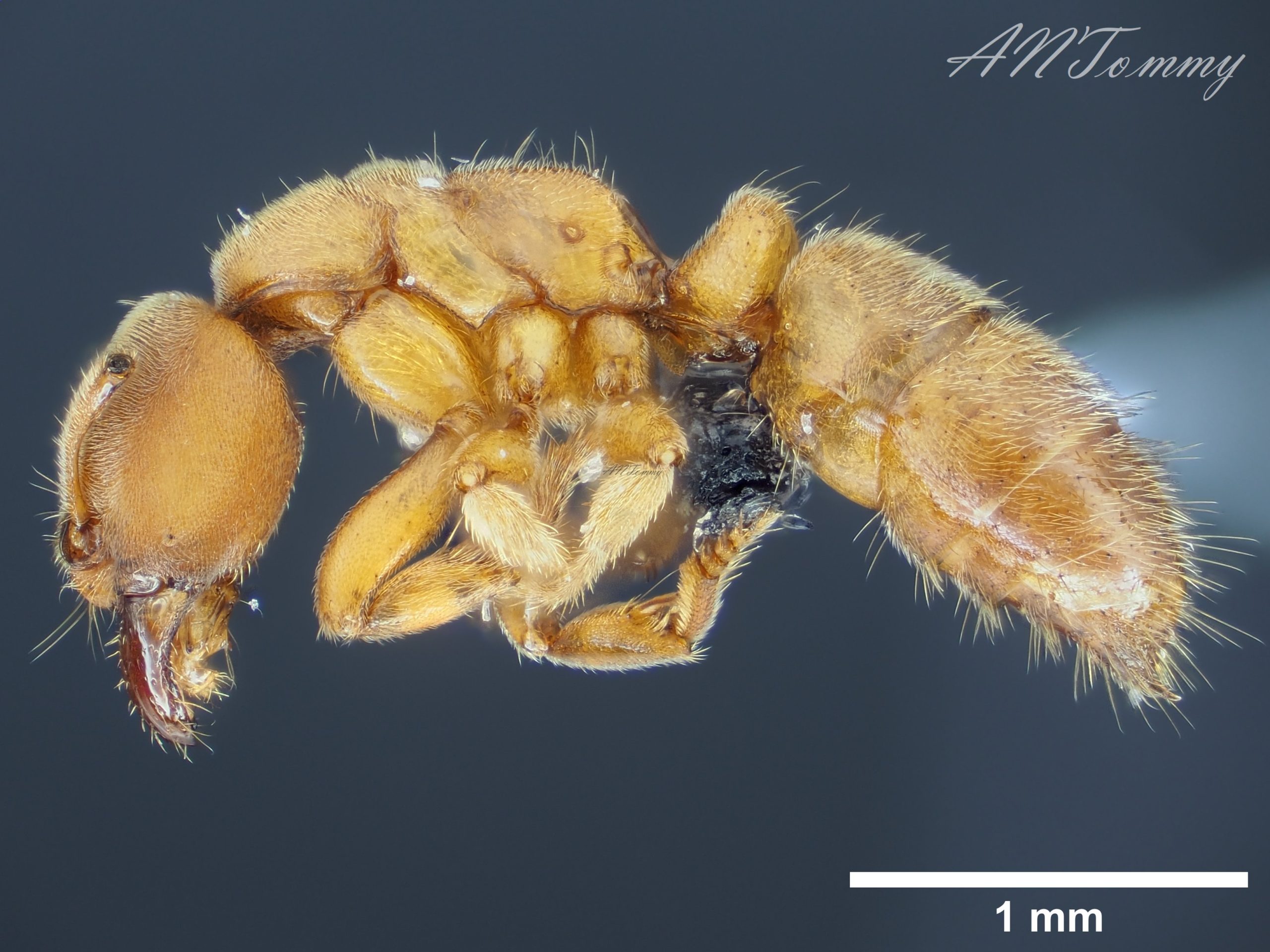
Worker

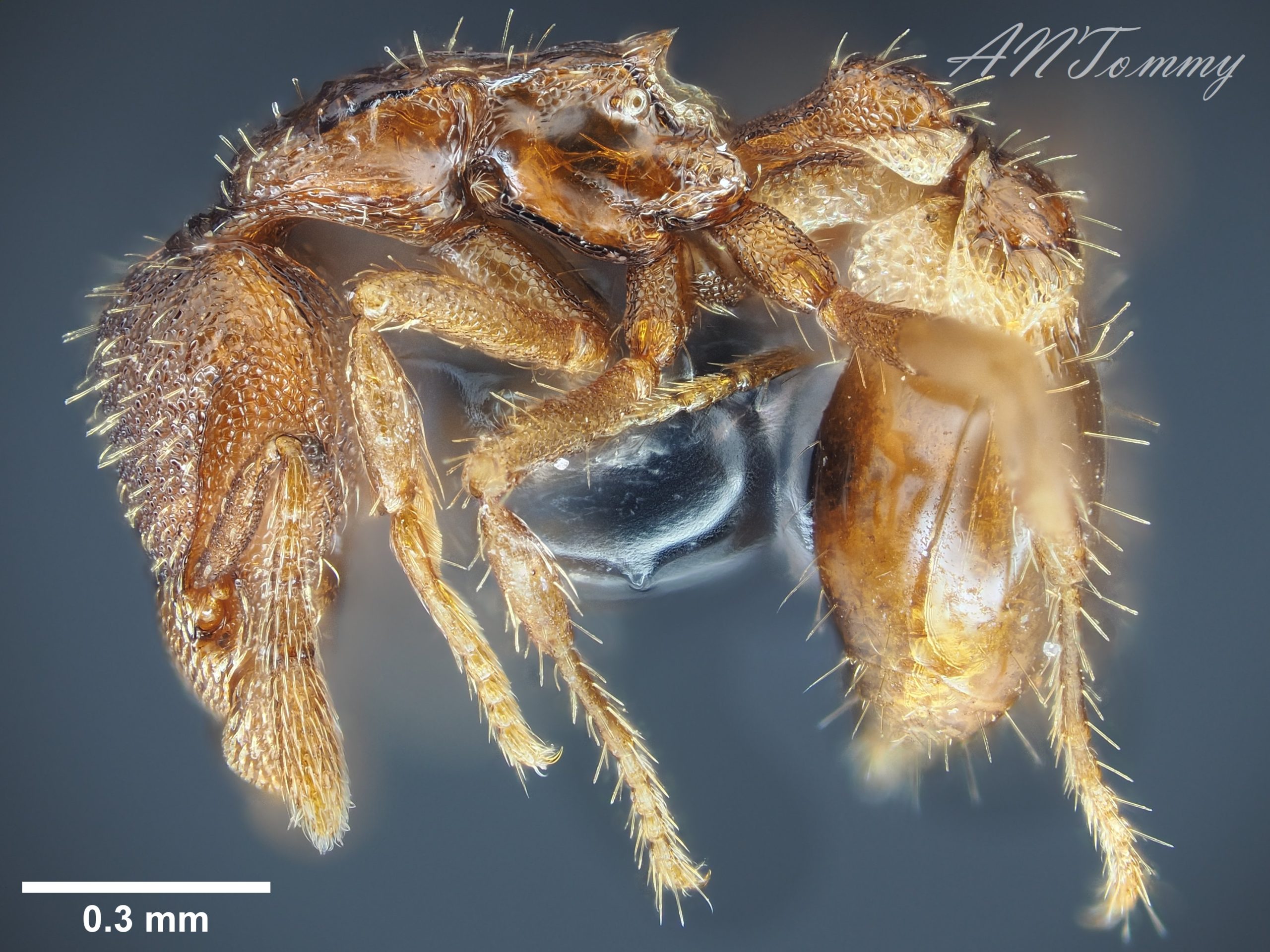
Strumigenys benten
Strumigenys benten
Strumigenys benten

Distinguishable from other species of the genus by its lightly arched, triangular-shaped mandibles, gently curved dorsum of mesosoma, scattered hairs on head and mesosoma, downward projecting anterior margin of clypeus, width of clypeus, gently curved posterior margin of head, and hairs on metapodial and hind tibiae.

Queen

Male

References

Terayama, M., C.-C. Lin & W.-W. Wu. 1996. “Taiwanese species of the ant genus Smithistruma (Hymenoptera, Formicidae).” Jpn. J. Ent., 64, 327-339.
Baroni Urbani, C. & De Andrade, M.L. 2007. “The ant tribe Dacetini: limits and constituent genera, with descriptions of new species.” Annali del Museo Civico di Storia Naturale “G. Doria”. 99:1-191.

Cryptopone sauteri

Cryptopone sauteri

Cryptopone sauteri Wheeler, 1906

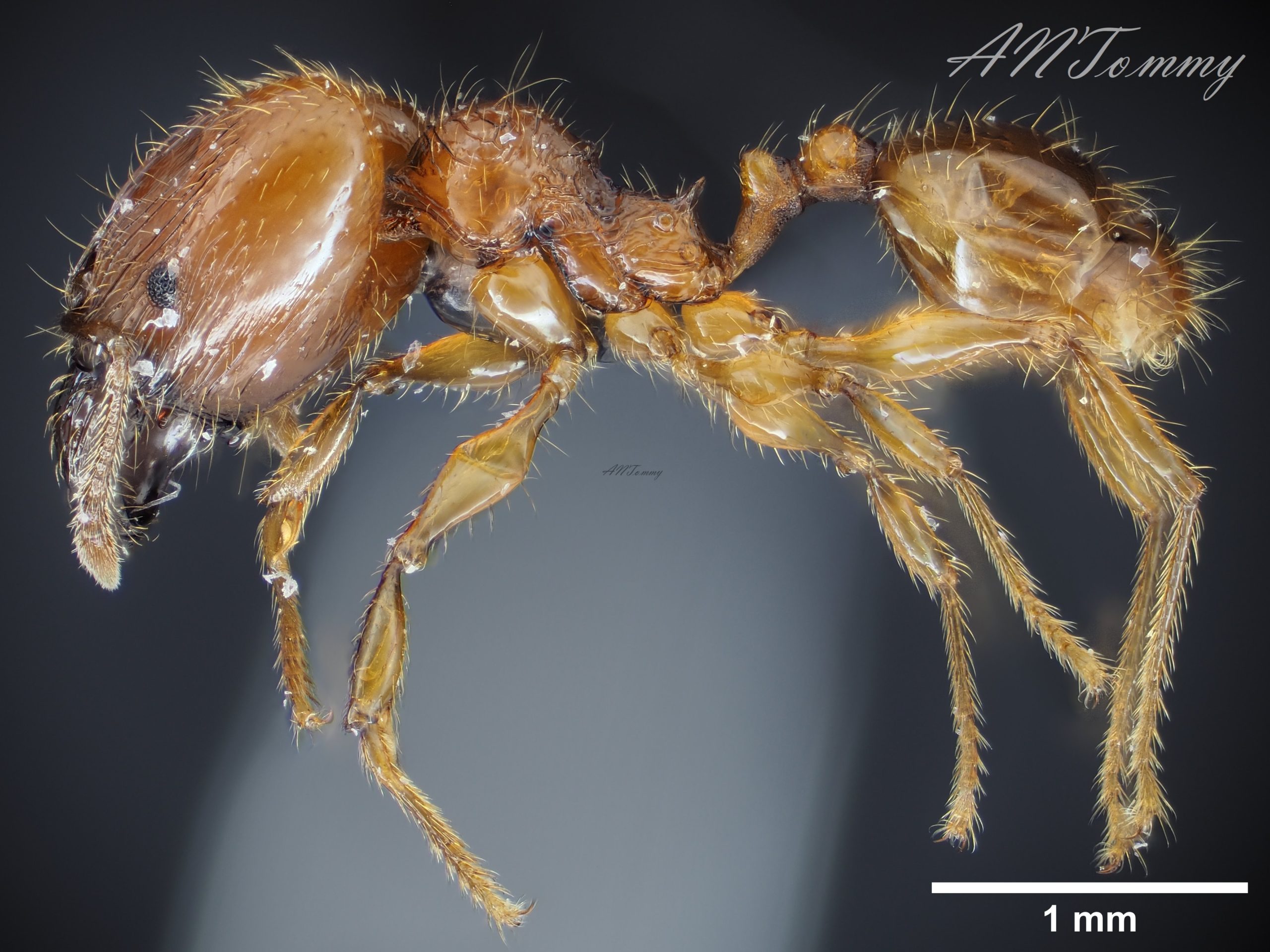
Worker

Cryptopone sauteri
Cryptopone sauteri
Cryptopone sauteri
Cryptopone sauteri
Cryptopone sauteri
Cryptopone sauteri

Distinguishable from other species of the genus by the shape of the sub petiolar process. Characterized by bristles on mid tibiae and a few ommatidia.

Queen

Cryptopone sauteri
Cryptopone sauteri
Cryptopone sauteri

Unlike workers, there are many ommatidia.

Male

References

Wheeler, W.M. 1906. “The ants of Japan.” Bulletin of the American Museum of Natural History 22: 301-328.
Pheidole fervida

Pheidole fervida

Pheidole fervida Smith, 1874

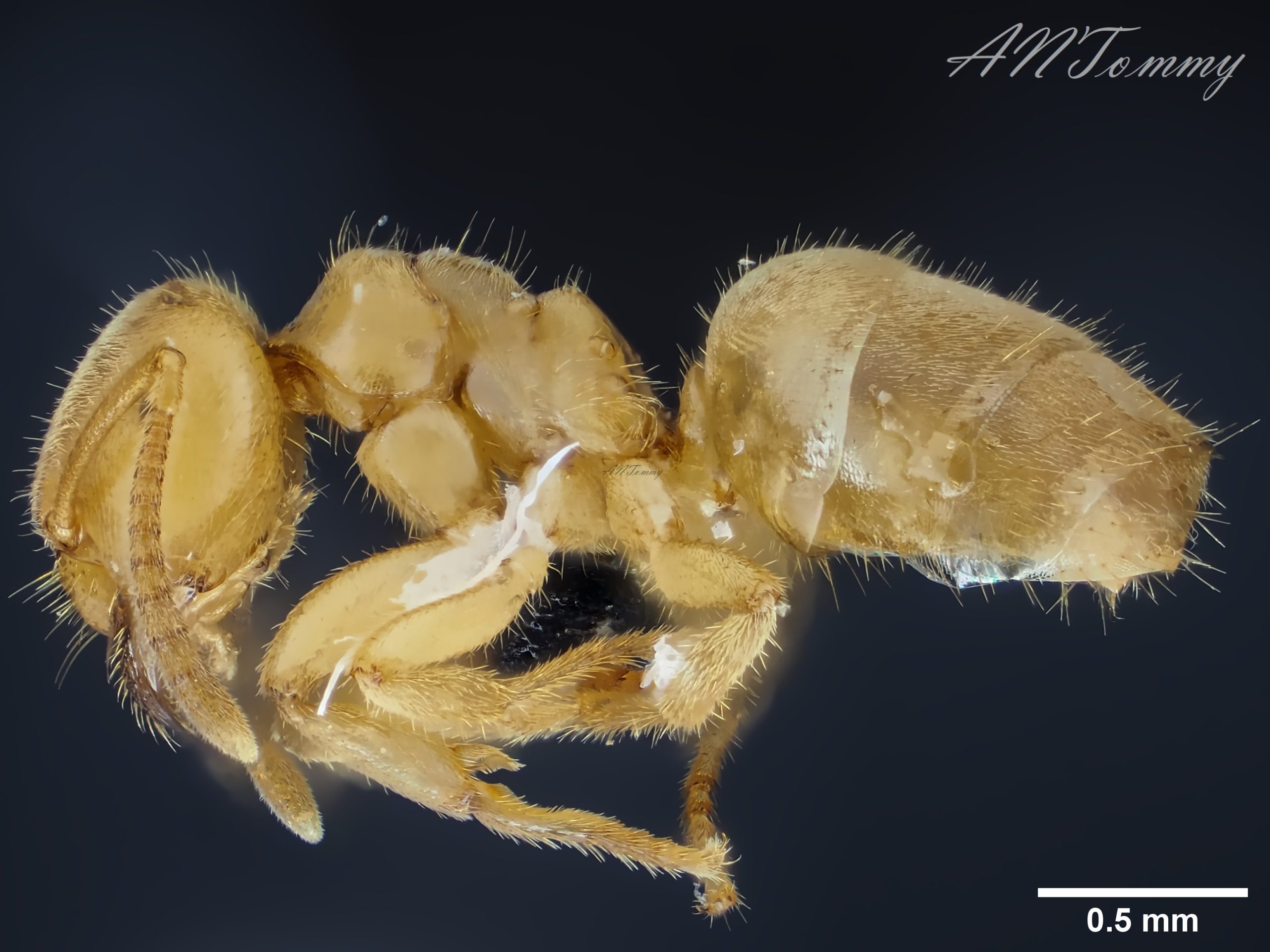
Minor Worker

Pheidole fervida
Pheidole fervida
Pheidole fervida

The occipital margin of the head is flat and sculptured, and the mesonotum has a single hump.

Major Worker

Pheidole fervida
Pheidole fervida
Pheidole fervida

Larger in size and distinctly different in shape from a minor worker, this soldier has relatively long scapes compared to other species in the genus.

Queen

Male

References

Smith, F. 1874. “Descriptions of new species of Tenthredinidae, Ichneumonidae, Chrysididae, Formicidae, &c. of Japan.” Transactions of the Entomological Society of London (4) 7: 373-409.
Lasius talpa

Lasius talpa

Lasius talpa Wilson, 1955

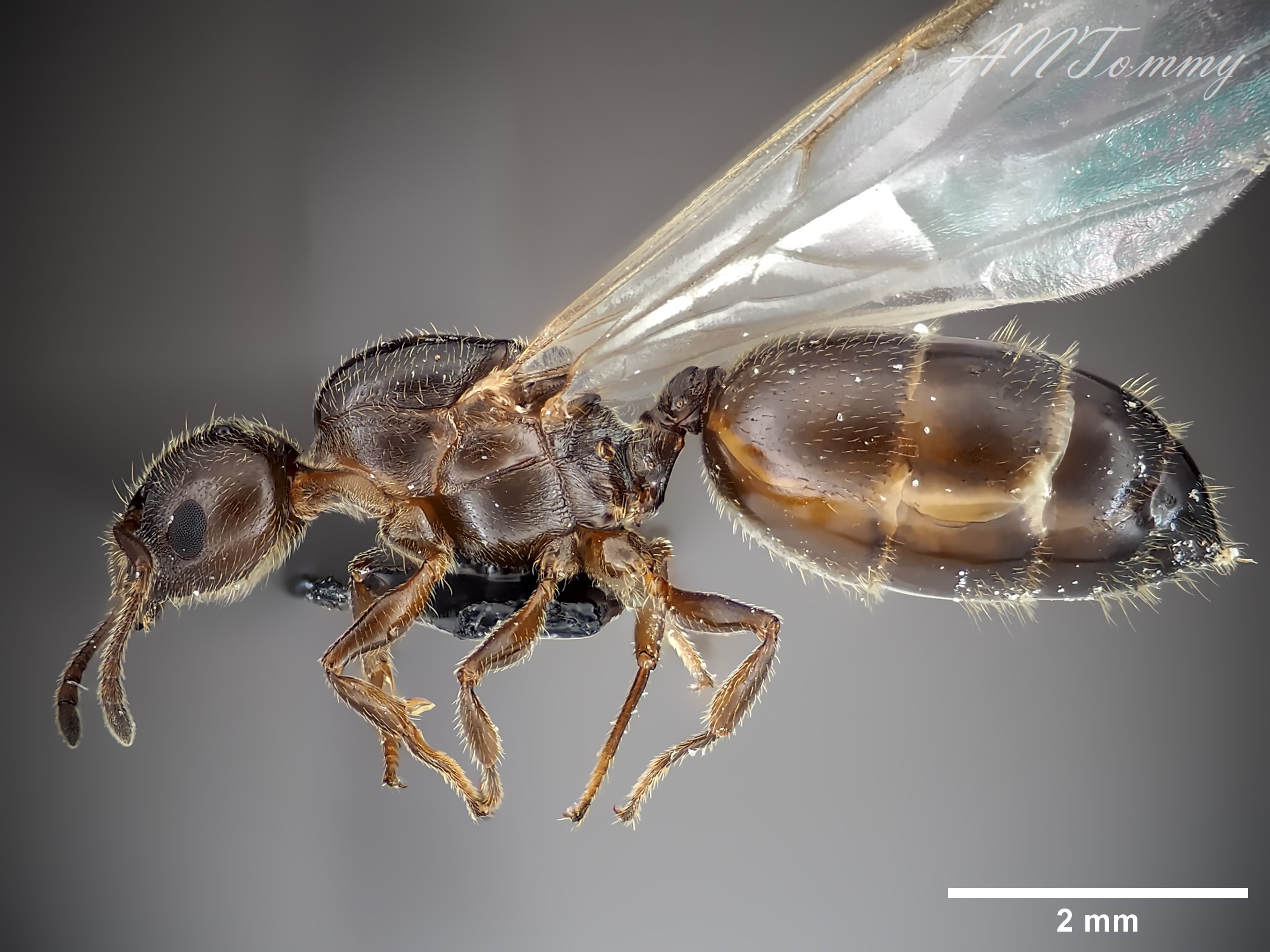
Worker

Lasius talpa
Lasius talpa
Lasius talpa
Lasius talpa

Distinguishable from other species of the subgenus by the many erect hairs on the antennal scapes and tibiae.

Queen

Male

Gallery

References

Wilson, E. O. 1955. “A monographic revision of the ant genus Lasius.” Bull. Mus. Comp. Zool. Harv., 113, 1-201.
Polyergus samurai

Polyergus samurai

Polyergus samurai Yano, 1911

Worker

Polyergus samurai
Polyergus samurai
Polyergus samurai

Queen

Male

References

Yano, M. 1911. “A new slave-making ant from Japan.” Psyche 18: 110-112.
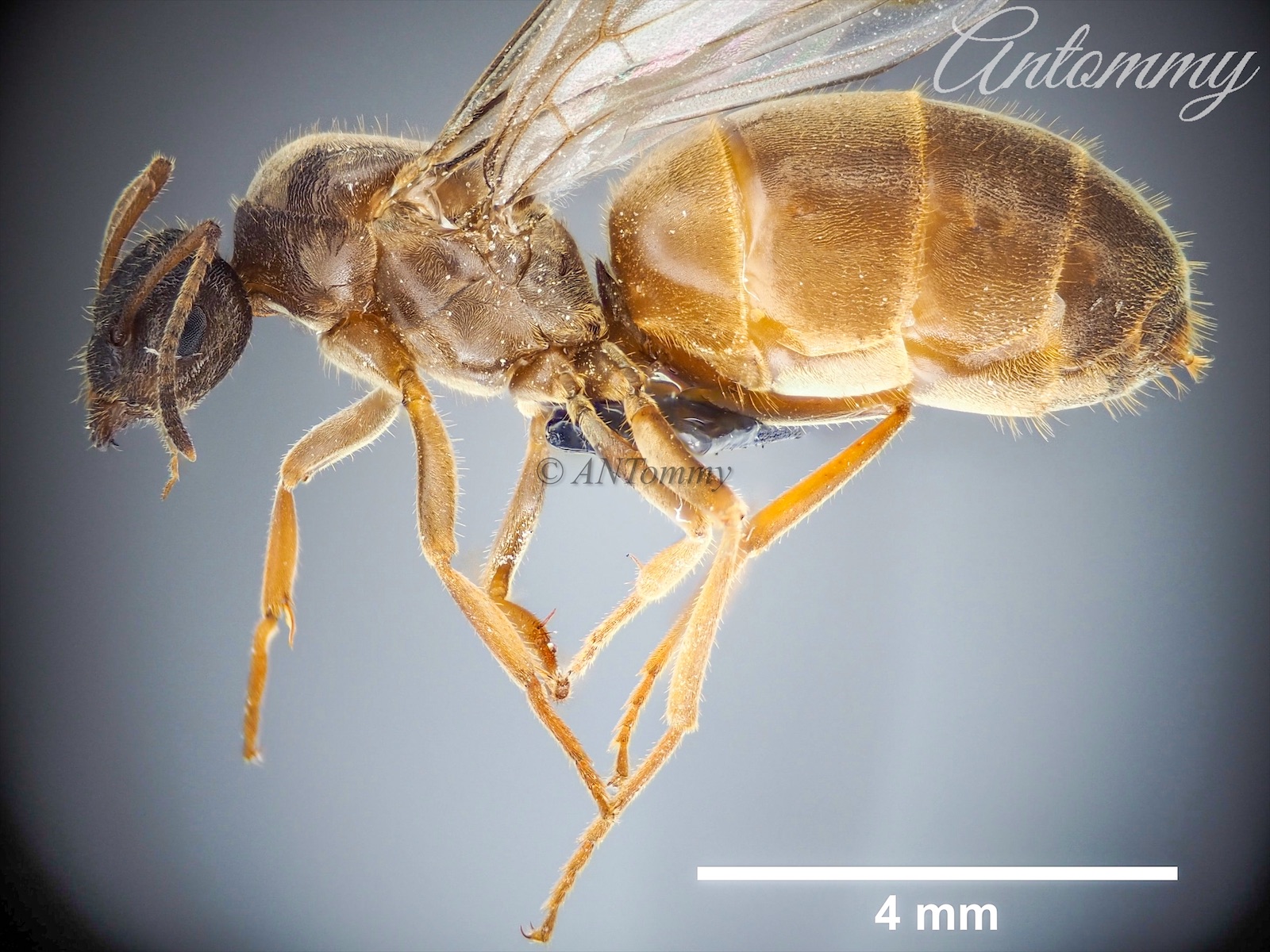
Lasius sakagamii

Lasius sakagamii

Lasius sakagamii Yamauchi & Hayashida, 1979

Worker

Queen

Lasius sakagamii
Lasius sakagamii
Lasius sakagamii

Male

References

K. Yamauchi, K. Hayashida. 1970. Taxonomic Studies on the Genus Lasius in Hokkaido, with Ethological and Ecological Notes (Formicidae, Hymenoptera). : II. The Subgenus Lasius (With 7 Text-figures and 5 Tables). JOURNAL OF THE FACULTY OF SCIENCE HOKKAIDO UNIVERSITY Series VI. ZOOLOGY, 17(3): 501-519

Yamauchi, K. 1979. Taxonomical and ecological studies on the ant genus Lasius in Japan (Hymenoptera: Formicidae). I. Taxonomy. Sci. Rep. Fac. Educ. Gifu Univ. (Nat. Sci.), 6, 147-181
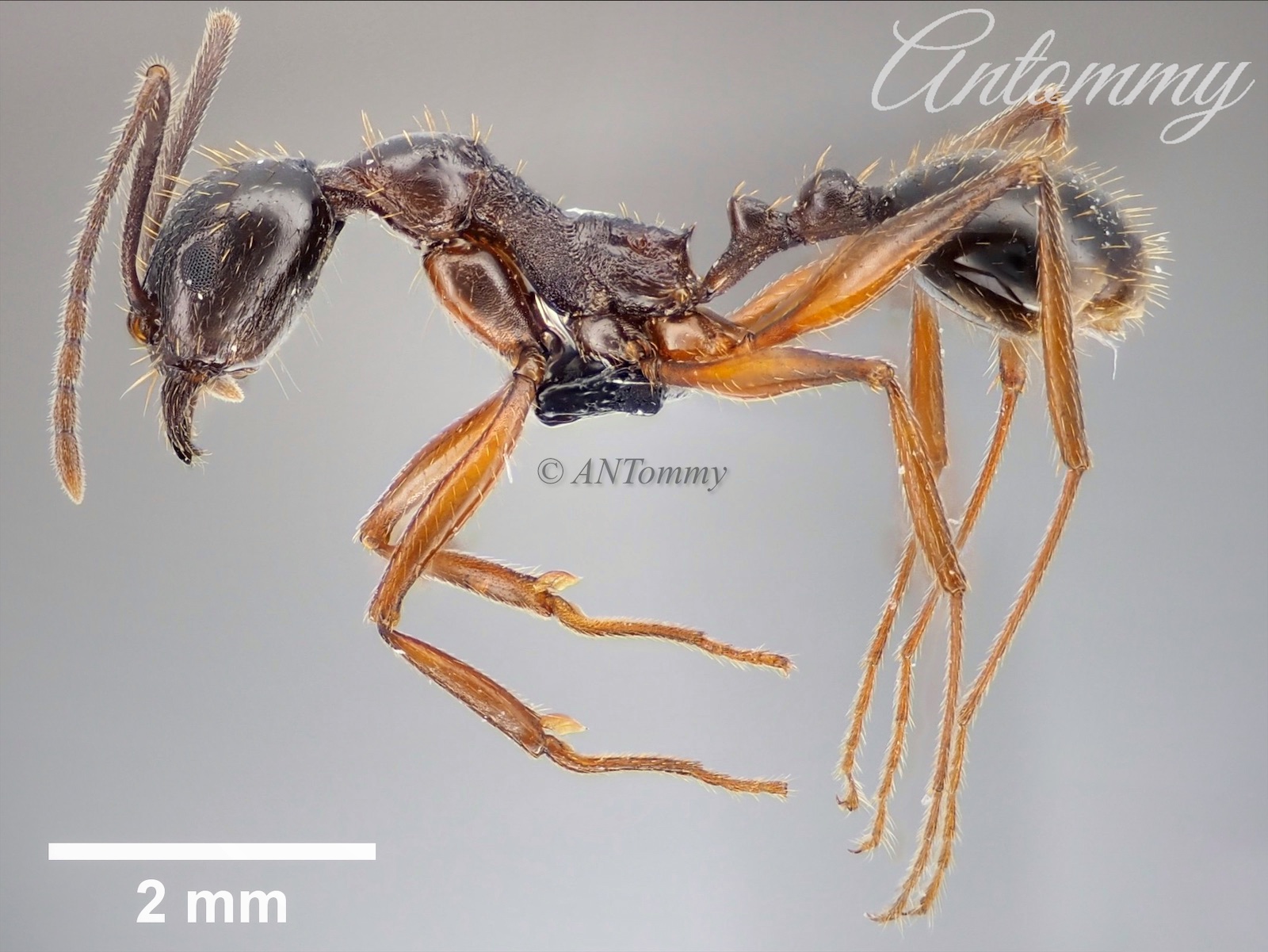
Aphaenogaster famelica

Aphaenogaster famelica

Aphaenogaster famelica Smith, 1874

Worker

Aphaenogaster famelica

Queen

Male

References

Yamane, S. (1996). New synonymy in the genus Aphaenogaster Mayr (Hymenoptera, Formicidae). Species Divers. 1: 111-115 (page 113, Senior synonym of frontosa, ruida and vapida)

Shin,D.O., Yoon.S.W., Lyu.D.P., (2020). Taxonomic review of the genus Aphaenogaster (Hymenoptera: Formicidae: Myrmicinae) in Korea with a newly recorded species. Journal of Asia-Pacific Biodiversity.

Yusuke Notomi, Tomoki Kazawa, So Maezawa, Ryohei Kanzaki, Stephan Shuichi Haupt (2022) Use of visual information by ant species occurring in similar urban anthropogenic environments. Zoological Science 39 (6).

Colobopsis nipponicus

Colobopsis nipponica

Colobopsis nipponica Wheeler, 1928

Worker

Queen

Colobopsis nipponica

Male

References

Ward, Philip & Blaimer, Bonnie & Fisher, Brian. (2016). A revised phylogenetic classification of the ant subfamily Formicinae (Hymenoptera: Formicidae), with resurrection of the genera Colobopsis and Dinomyrmex. Zootaxa. 4072. 343-357.

HASEGAWA, EISUKE & WATANABE, SAORI & MURAKAMI, YUUKA. (2017). Evolution of the optimal reproductive schedule in the ant Camponotus (Colobopsis) nipponicus (wheeler): a demographic approach: Reproductive schedule in an ant. Ecological Entomology. 43.

Fujioka, Haruna & Abe, Masato & Okada, Yasukazu. (2019). Observation of plugging behaviour reveals entrance‐guarding schedule of morphologically specialized caste in Colobopsis nipponicus. Ethology. 125.